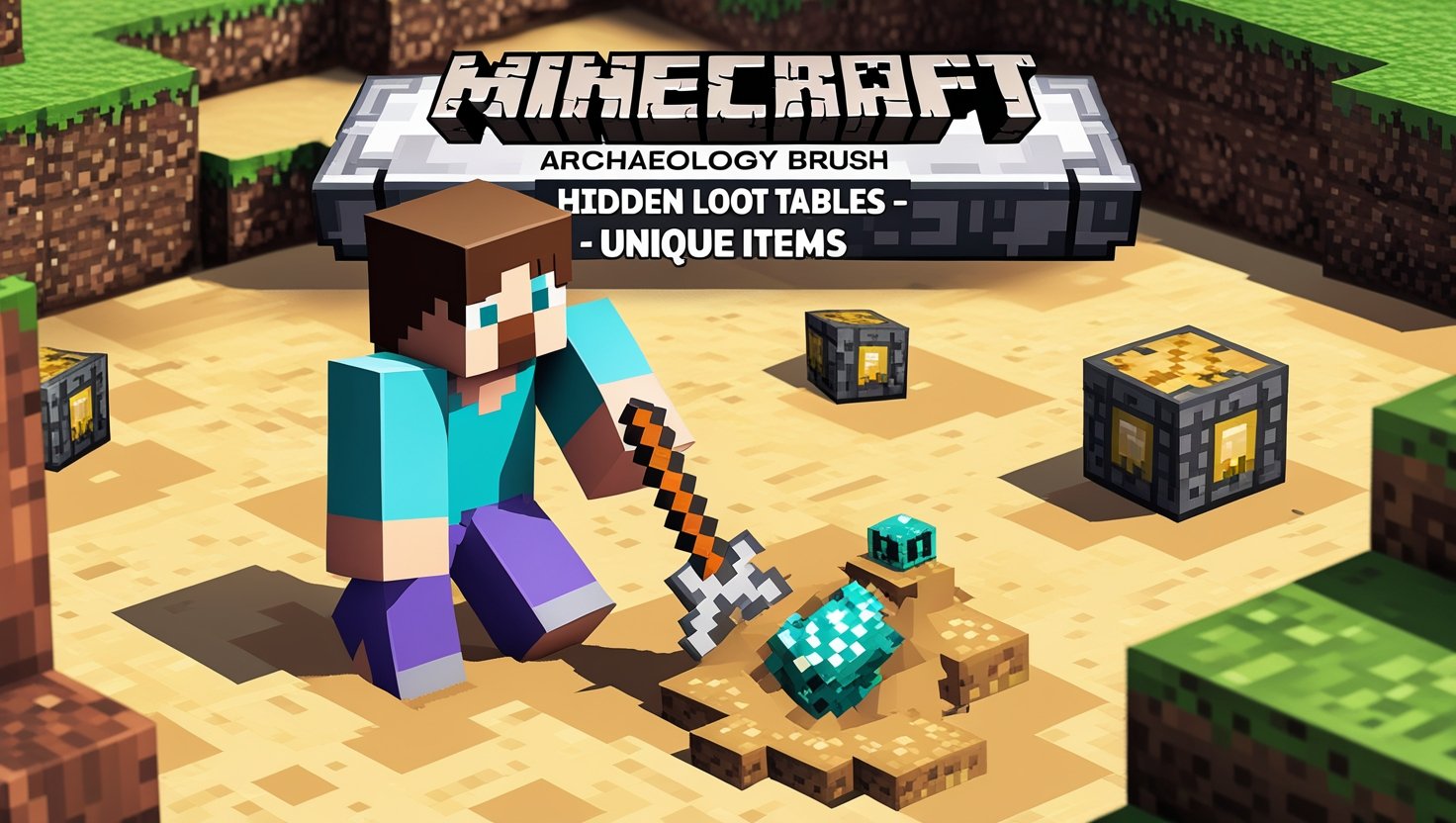

Imagine unearthing secrets buried deep beneath pixelated ruins, a world where every brush stroke reveals a piece of digital history, and each discovery offers a glimpse into Minecraft’s secret past. In this era of immersive exploration, the archaeology update transforms the simple act of mining into a delicate art of discovery. With tools like the Minecraft Archaeology Brush, adventurers now have the power to reveal hidden loot tables and procure unique items that redefine the gaming experience. This article will take you on an exploratory journey through Minecraft’s archaeological features and reveal why every explorer should embrace this innovative way to rediscover lost treasures.
Minecraft Archaeology Unveiled:
Minecraft’s archaeology update is not just another feature, it’s a portal into a newly imagined historical dimension of your familiar blocky world. This update infuses the game with an exploratory spirit by introducing mysterious blocks like suspicious sand and gravel, which hide secrets of long-forgotten civilizations. Unlike regular blocks, these contain potential relics waiting to be uncovered, making every expedition an opportunity to piece together digital history.
In this reimagined landscape, players dive into a narrative that complements Minecraft’s creative freedom. The archaeology mechanic transforms outdoor adventures into a quest for ancient artifacts, drawing explorers into an interactive museum of insights. The excitement lies in the blend of chance and skill; a careful click of your brush might reveal historical pottery sherds, decorative relics, or even a rare item with unexpected utility. With each brush stroke, you’re not only collecting loot, you’re becoming a part of a timeless story written in pixels.
The Delicate Dance of Discovery:
At the core of this archaeological adventure is the brush, a meticulously designed tool that demands precision, patience, and a gentle touch. Unlike the more aggressive mining tools used for conventional blocks, the brush is tailored for the intricate task of excavating suspicious blocks found in various biomes like deserts and ocean ruins.
This specialized tool is crafted from simple yet symbolic ingredients: a feather for lightness, a copper ingot for durability, and a stick to convey direction. When applied to suspicious blocks, the brush methodically clears away layers of sediment, revealing concealed artifacts hidden within. Unlike brute-force mining, the brushing process is a form of digital archaeology where haste leads to lost discoveries. Each suspicious block offers four “charges” of brushing, and each charge increases the chance of uncovering something rare or unique. Embracing the gentle dance with the brush not only maximizes your yield but also preserves the integrity of these fragile relics, ensuring that every discovery is as rewarding as it is delicate.
Decrypting Hidden Loot Tables:
One of the most fascinating aspects of Minecraft archaeology is the concept of hidden loot tables. Unlike conventional loot drops, where outcomes are predictable, hidden loot tables are intricate algorithms that determine the treasures embedded within every suspicious block. These tables are the digital guardians of mystery, ensuring that each excavation holds the promise of an unexpected reward.
When you brush a suspicious block, the game’s engine consults its hidden loot table, a repository of items ranging from common scraps to rare, culturally significant artifacts. The randomness associated with these tables means that the excitement of discovery is never diminished. A player might unearth everyday items like sticks or bricks one moment and then stumble upon an invaluable relic the next. This unpredictability is a deliberate design choice, fostering a spirit of exploration and encouraging persistent search. With every brush stroke, you are not just collecting unique items; you’re engaging with a complex system that challenges the notion of chance and reward in virtual exploration.
Collecting Unique Items:
The allure of archaeology in Minecraft extends far beyond the thrill of discovery. Every artifact you uncover has the potential to become part of your in-game museum, a curated collection that tells the story of your digital world. These unique items are not mere collectibles, they are snapshots of history, offering both functional benefits and decorative appeal.
For example, pottery sherds can be transformed into decorated pots that not only serve as artistic accents in your builds but also bear the symbolic marks of ancient designs. Some items might even have unforeseen utilities, providing advantages during gameplay or unlocking new crafting recipes. The process of combining these elements is akin to assembling a puzzle where each piece adds context and richness to the narrative of your Minecraft journey. By strategically collecting and preserving these unique artifacts, you’re not only unlocking rewards but also weaving together the tapestry of Minecraft’s hidden past, a past that is uniquely yours to rediscover and celebrate.
Balancing Preservation and Perseverance:
As with any tool of discovery, the brush is both a powerful ally and a fragile instrument. In the world of Minecraft archaeology, careful usage of the brush is paramount. Each suspicious block you encounter is a delicate piece of history, and the very act of brushing requires precision to avoid damaging the hidden items inside.
The brush comes with a limited number of uses, demonstrated by its “durability” count, reflecting its capacity to handle even the most sensitive of relics. Each time you use the brush, one charge is consumed. Once all charges are expended, that opportunity for discovery is lost. This mechanic nudges players to balance the thrill of excavation with the need for preservation, a digital parallel to real-world archaeological practice. To prolong your brush’s lifespan, focus on targeting blocks that show clear signs of buried treasures and avoid hasty movements that might deplete its durability without reward. Mastering this balance between preservation and perseverance transforms the gameplay into a mindful exploration where every move counts and every item uncovered is a testament to your careful technique.
Tips and Tricks for Archaeological Success:
For those eager to maximize their archaeological exploits, a few expert strategies can markedly improve your chances of success. First, familiarize yourself with the types of suspicious blocks common in your local biomes. Deserts, warm ocean ruins, and even trail ruins can yield different outcomes based on the block type and its location. Maintaining a strategic approach not only boosts the likelihood of finding rare items but also prevents accidental destruction of newly uncovered artifacts.
Another essential tip is to always keep your brush well-maintained. Given its limited durability, consider conserving its use for blocks that promise a higher reward. Plan your excavation route in a methodical manner, study the area, mark suspicious sites, and work slowly from one section to the next. Combining this with frequent inventory checks ensures that any discovered relics can be safely stored in chests or showcased in a custom museum. Moreover, remain patient; the archaeology mechanic rewards careful observation and methodical progress. These steps, along with an attentive brush technique, create a recipe for archaeological success that turns every session into a rewarding narrative of discovery and wonder.
The Evolution and Future of Minecraft Archaeology:
As Minecraft continues to evolve, so too do the mechanics that fuel its sense of adventure. The archaeology feature is a shining example of how game designers blend storytelling, history, and innovation into a seamless interactive experience. Looking ahead, future updates may introduce even more elaborate loot tables, additional unique items, and enhanced tools that further immerse players into the world of digital excavations.
The potential for expansion is immense. Imagine a system where discovered artifacts can be combined to reveal even grander narratives or where special relics open up secret passageways in the game’s expansive map. These developments not only keep the gameplay fresh and engaging but also ensure that every new update is a deep dive into evolving virtual history. By pushing the boundaries of what is possible with features like hidden loot tables and the refined use of the brush, Minecraft archaeology is poised to become a cornerstone of player-driven storytelling. This evolution mirrors the real world, where every new discovery adds to our collective understanding of history, and in Minecraft, each unique item enriches the story of your very own block-based universe.
Conclusion:
The advent of Minecraft archaeology has redefined exploration in the game by merging careful technique with the thrill of discovery. With the brush as your tool, every excavation is an opportunity to dive into hidden loot tables and unearth unique items that tell the story of Minecraft’s lost civilizations. As you balance careful preservation with daring exploration, remember that each relic uncovered is a piece of a larger digital narrative, one that continues to evolve with every new discovery.
FAQs:
Q1: What is Minecraft Archaeology?
A feature that lets you excavate hidden relics with a brush.
Q2: How does the brush work?
It delicately reveals items in suspicious blocks.
Q3: What are hidden loot tables?
They determine the random treasures inside excavation sites.
Q4: What unique items can be found?
Rare artifacts like pottery sherds and decorative relics.
Q5: How do I preserve my brush’s durability?
Use it carefully on promising blocks only.
Q6: What future updates might bring?
Expanded loot tables and even more unique discoveries.
