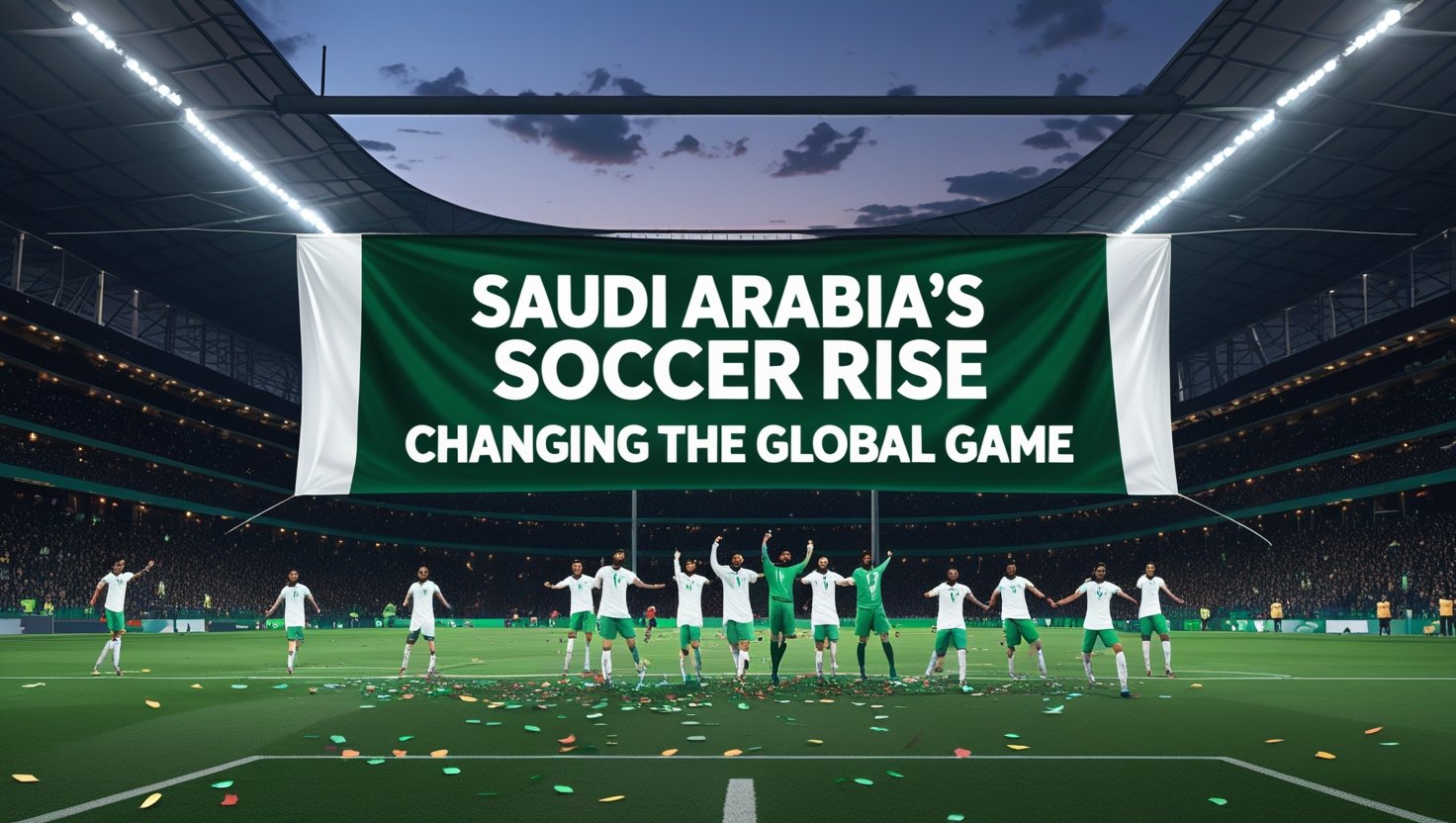

Picture a nation renowned for oil wealth pivoting its global identity through the universal language of football, that’s the story of Saudi Arabia’s soccer rise. From landmark signings and state-of-the-art stadiums to grassroots programs and international partnerships, the Kingdom is writing a new chapter in the global game. In this article, we unpack how strategic vision, hefty investments, and a passion for sport have combined to transform Saudi Arabia into one of football’s most compelling modern success stories.
Vision 2030 Kickstart:
When Crown Prince Mohammed bin Salman unveiled Vision 2030, it wasn’t just about diversifying the economy, it was about reimagining Saudi identity. Football found its place at the heart of this transformation. Under the Saudi Vision 2030 banner, government bodies co-own clubs, fund youth academies, and sponsor international tournaments.
The result? A focused pivot from traditional oil revenues toward sports, entertainment, and tourism. This blueprint set clear targets: elevate the Saudi Pro League, bolster the national team’s FIFA ranking, and host marquee events that captivate audiences worldwide. By weaving football into its national development strategy, Saudi Arabia laid the foundation for an unprecedented sporting renaissance.
High-Profile Signings:
Nothing ignites global headlines like a superstar transfer, and Saudi clubs have delivered. From Cristiano Ronaldo’s move to Al-Nassr FC to Karim Benzema joining Al-Ittihad, the Kingdom has courted marquee talent. These signings do more than pack stadiums; they raise the league’s technical standards, draw international media coverage, and inspire local players to up their game.
With every press conference, Saudi Arabia cements its reputation as a destination where legends meet ambition. As experienced veterans intertwine with emerging Saudi talent, the Pro League evolves into a melting pot of styles and cultures, accelerating both on-field quality and the Kingdom’s stature in world football.
Pro League Transformation:
The Saudi Pro League has undergone radical modernization. Clubs now operate under professional licenses, abide by financial-fair-play regulations, and adopt advanced analytics for player scouting. Investment in coaching education, sports science, and youth academies has intensified competition across all 18 teams. Matchdays have turned into full-blown events with pre-game fan zones, halftime shows, and digital engagement platforms.
Broadcast deals with global networks ensure that fans from Tokyo to Toronto can tune in live. These steps, combined with the allure of top foreign stars, have catapulted the Pro League into the top 20 leagues worldwide in just a few seasons, proving that ambition backed by resources can rapidly reshape a domestic competition.
From Pitches to Playgrounds:
Long-term impact rests on youth development, and Saudi Arabia is planting seeds nationwide. The General Sports Authority (GSA) has launched community football programs in hundreds of schools, introduced coach-training workshops, and built mini-pitches in urban neighborhoods. Initiatives like “Future Champions” identify promising players as young as eight, nurturing them through rigorous technical training, nutritional guidance, and mental-skills workshops.
Simultaneously, private academies have mushroomed, often in partnership with European giants like Barcelona and Borussia Dortmund. By democratizing access to quality coaching and facilities, the Kingdom aims not only to produce the next generation of Saudi internationals but also to instill a lifelong love for the global game.
State-of-the-Art Stadiums:
Modern football demands modern venues. Saudi Arabia has answered with cutting-edge stadiums that rival Europe’s finest. The King Abdullah Sports City in Jeddah, with its 62,000-seat capacity and sleek white canopy, blends architectural elegance with advanced acoustics. Riyadh’s Al-Awwal Park incorporates sustainable features, solar panels, rainwater harvesting, and zero-waste systems, showing that environmental responsibility and grand designs can coexist.
These venues aren’t just backdrops for domestic matches; they host African Cup of Nations qualifiers, high-profile friendlies, and even concerts by global acts. Each new stadium becomes a landmark, signaling Saudi Arabia’s commitment to delivering world-class experiences for players and fans alike.
Saudi Arabia’s Football Diplomacy:
Beyond domestic growth, Saudi Arabia has embraced football as a tool of soft power. Strategic partnerships with UEFA, FIFA, and top European clubs facilitate coach exchanges, pre-season tours, and friendly tournaments on Saudi soil. The Riyadh Season festival packages exhibition matches featuring elite teams, drawing tourists and investors.
Even the Saudi national team, “Al-Suqour” (The Falcons), regularly competes in international training camps, exposing players to varied tactical systems. Such collaborations extend the Kingdom’s influence across Asia, Europe, and Africa, positioning Saudi Arabia not just as a consumer of football content but as a proactive shaper of the global game.
Conclusion:
Saudi Arabia’s soccer rise isn’t a flash in the pan; it’s a multifaceted strategy blending policy, investment, and passion to redefine the Kingdom’s role in world football. From Vision 2030 ambitions and blockbuster signings to grassroots revolutions and international partnerships, every move underscores a deep commitment to excellence. As stadiums fill, local talents emerge, and global stars arrive, Saudi Arabia writes a bold new chapter, one that’s already reshaping the global game and inspiring nations worldwide to dream bigger.
FAQs:
1. What sparked Saudi Arabia’s soccer transformation?
The launch of Vision 2030 prioritized sports, leading to massive investments in clubs, academies, and infrastructure.
2. How have foreign stars impacted the Pro League?
Signings like Cristiano Ronaldo and Karim Benzema have boosted competitiveness, global viewership, and local player development.
3. What role do youth programs play?
Grassroots initiatives and “Future Champions” camps democratize access to quality coaching, ensuring a talent pipeline for decades.
4. Are Saudi stadiums up to international standards?
Absolutely. Venues like King Abdullah Sports City feature modern amenities, eco-friendly designs, and FIFA-level facilities.
5. How is Saudi football forging global ties?
Through partnerships with UEFA, friendly tournaments, and hosting top clubs, enhancing the Kingdom’s football diplomacy.
6. Will Saudi Arabia host a major football tournament?
Yes. With world-class infrastructure and organizational backing, Saudi Arabia is a strong contender for future FIFA and continental events.
